
Navigating the future of icebreaking design
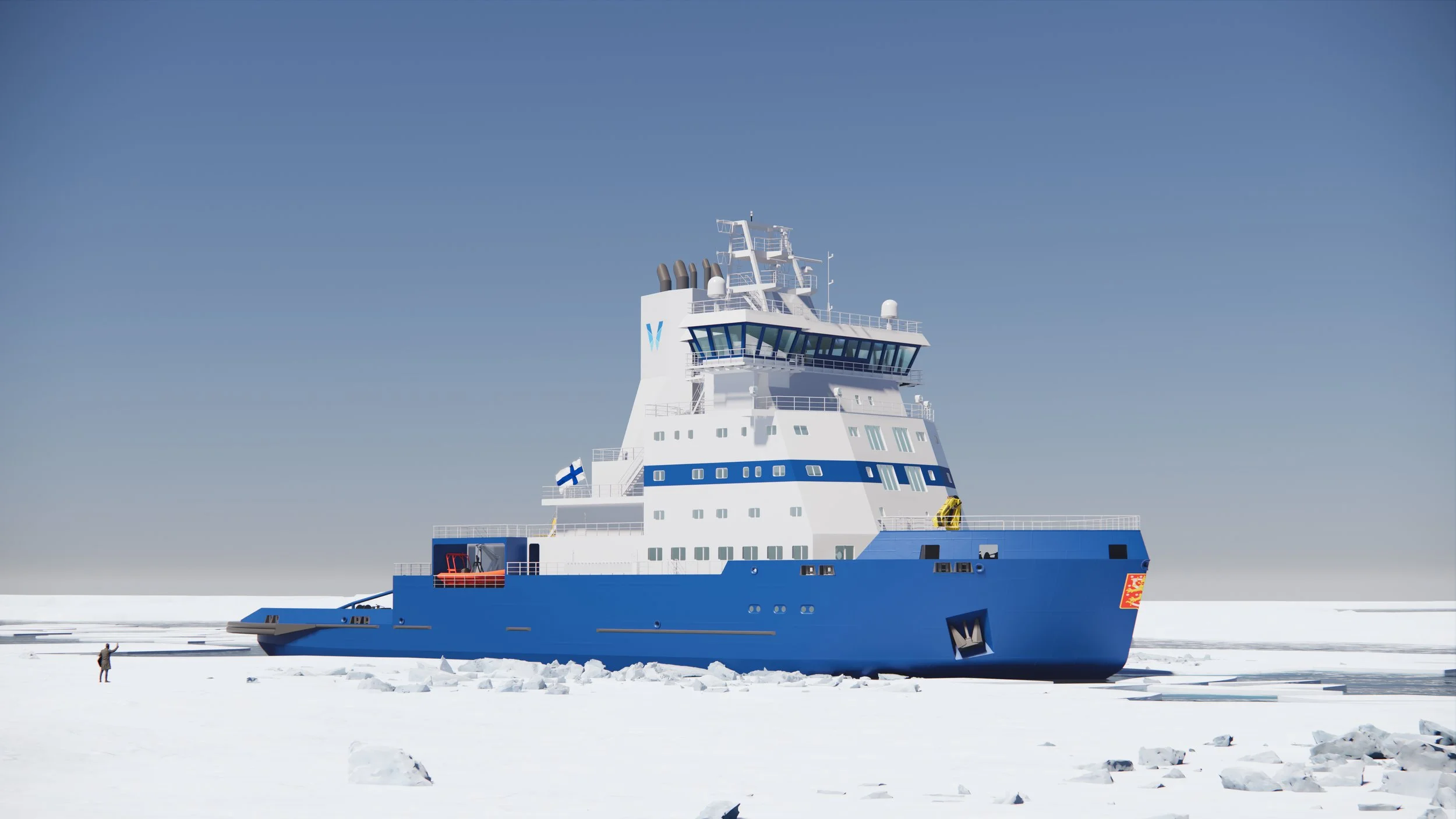
Railotech has recently completed a next generation icebreaker design for Finland, optimised for life cycle efficiency over a 50-year service life.
Railotech’s Managing Director, Mika Hovilainen, reflects on how evolving market demands and emerging trends are increasing vessel complexity and reshaping icebreaker design through new areas of technical expertise. A shifting geopolitical landscape, a growing global focus on the Arctic, and rapidly evolving customer requirements are adding new dimensions to the market.
The global icebreaker sector is undergoing structural change. Tightening environmental standards, ageing fleets, and the Arctic’s rising strategic importance are reshaping priorities. Icebreakers are no longer viewed solely as enablers of winter navigation, but increasingly as instruments of national resilience and security.
Modern vessels incorporate sophisticated systems to meet today’s energy efficiency and emission requirements, including emission-reduction technologies, energy storage solutions, and alternative fuel capabilities. Compliance with stricter regulations demands deeper technical integration. Optimising hull forms, propulsion systems, and overall vessel design for efficiency, safety, and reliability has become the new baseline.
“Technologically, vessels are becoming increasingly complex, and even small gains in energy efficiency are valuable in reducing lifecycle costs,” says Hovilainen. “The reality is that we can no longer build the same ships as we did twenty years ago.”
Growing importance of technical expertise
Hovilainen emphasises the rising importance of advanced technical capability. With an expanding array of design options, selecting the optimal solution for each vessel requires deep knowledge, operational understanding, and continuous innovation.
“At Railotech, developing multiple icebreaker design concepts each year ensures we remain at the forefront of the industry. Every project brings new technical challenges that push us forward,” explains Hovilainen.
Over the past two decades, 59 icebreaking vessels based on Railotech’s designs have entered service worldwide, with 36 more under development. These vessels have been constructed at eleven shipyards around the world, supported by Railotech’s engineering expertise.
“For shipyards, improving constructability remains essential to controlling costs. The shift towards goal-based regulations will introduce additional considerations, as requirements can be achieved through alternative technical solutions,” notes Hovilainen.
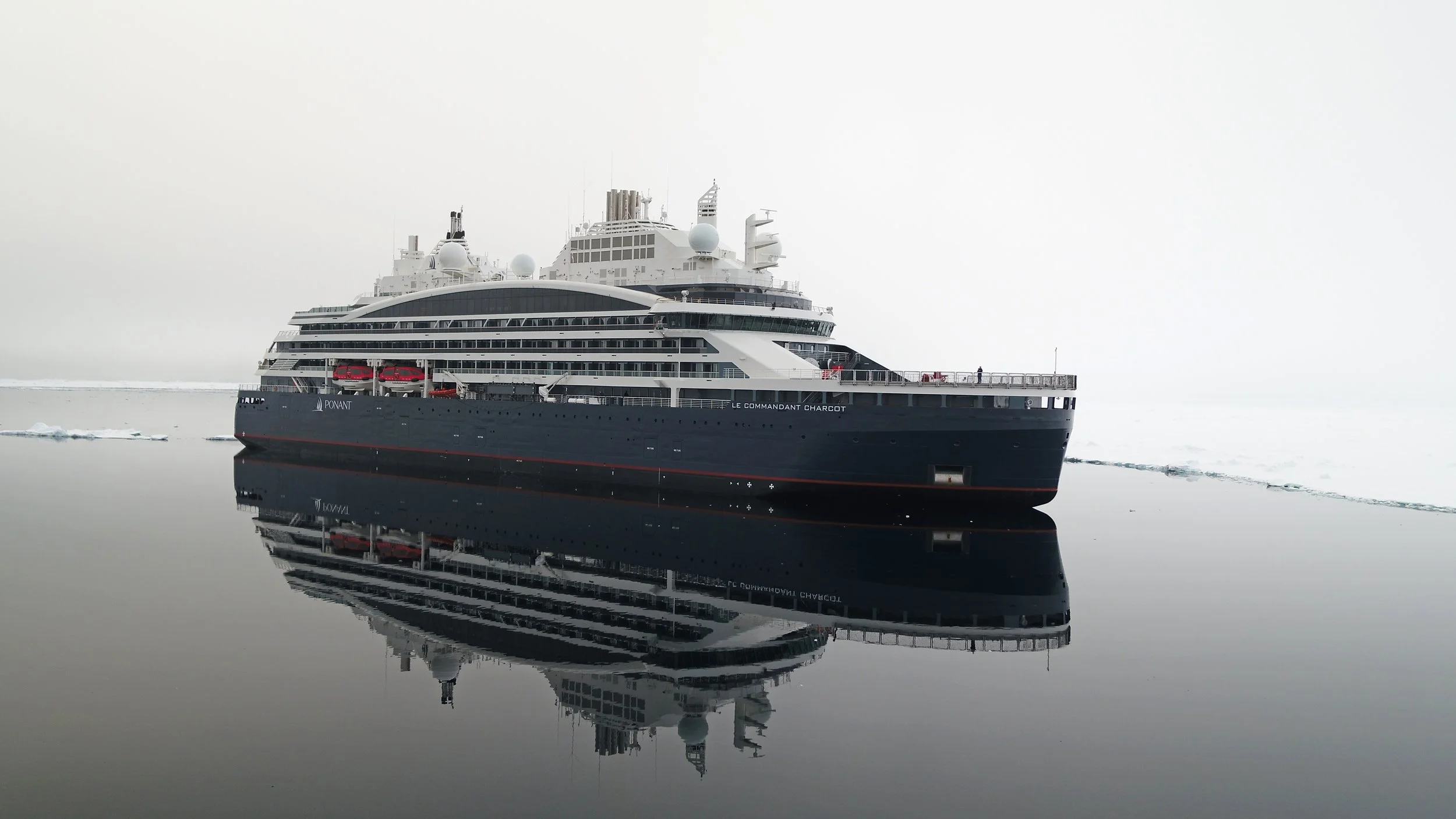
The luxurious exploration cruise ship Le Commandant Charcot is one of the most capable icebreakers in the world.
A lifecycle approach to cost and performance
Icebreakers are long-life assets, and investment decisions extend far beyond the initial acquisition cost.
“Considering life cycle costs and emissions at the concept stage has become standard practice,” Hovilainen observes. “This requires a design philosophy grounded in operational understanding.”
In icebreaking, improving energy efficiency reduces both operating costs and emissions. When tasks are completed more efficiently, both financial and environmental benefits follow.
Towards a more efficient future
As emission regulations continue to tighten, the transition towards fossil-free fuels becomes inevitable. Improving energy efficiency is critical to offset the challenges associated with alternative fuels, such as lower energy density. Rising fuel prices will also influence vessel operations.
“Ships are already operating at reduced speeds to meet EEDI (Energy Efficiency Design Index) requirements and optimise fuel economy. This trend will continue,” says Hovilainen.
He also anticipates larger vessels carrying greater cargo volumes to reduce fuel consumption per transported unit. To support this development, Railotech has studied operating concepts in which large commercial vessels are assisted by smaller, highly capable icebreakers.
Ensuring reliable winter navigation
Ageing icebreaker fleets worldwide will require renewal within the coming decade. In the Baltic region, Railotech has recently designed a next-generation A-class icebreaker for Sweden and completed the design of a new B-class icebreaker for Finland, which will replace Finland’s oldest icebreaker, Voima.
“Finnish trade depends on a reliable winter navigation system. Our mission is to ensure it remains efficient, sustainable, and safe,” says Hovilainen.
International cooperation between Finland, Canada, and the United States has advanced significantly through the ICE Pact. A key outcome is the U.S. Arctic Security Cutter programme, strengthening Finland’s role in Arctic security while deepening transatlantic technological cooperation. Six of the icebreakers are based on the Multi-Purpose Icebreaker concept developed by Railotech, with construction taking place in both Finland and the United States.
Tools for safety
Beyond ice-capable vessel design, Railotech is developing tools to support operational decision-making in ice conditions.
Railotech has recently secured multiple contracts for its Ice Load Monitoring System (ILMS), which measures the structural loads experienced by vessels operating in ice. The system enhances operational safety and provides real-time guidance to crews.
“The real expertise lies not in measuring loads, but in understanding structural response and calibrating the system correctly,” says Hovilainen.
Five decades at the forefront of icebreaker design
For more than fifty years, Railotech has led the development of icebreaker design and performance in Finland. What began as a national necessity - keeping Finnish ports open year-round - has evolved into a globally recognised centre of excellence in icebreaker technology.
During its first three decades, Railotech operated within the Finnish shipbuilding industry. In 2005, a strategic decision consolidated Finland’s accumulated ice expertise into the independent authority Aker Arctic Technology. Since March 2026, the company operates under a new name: Railo Technology.
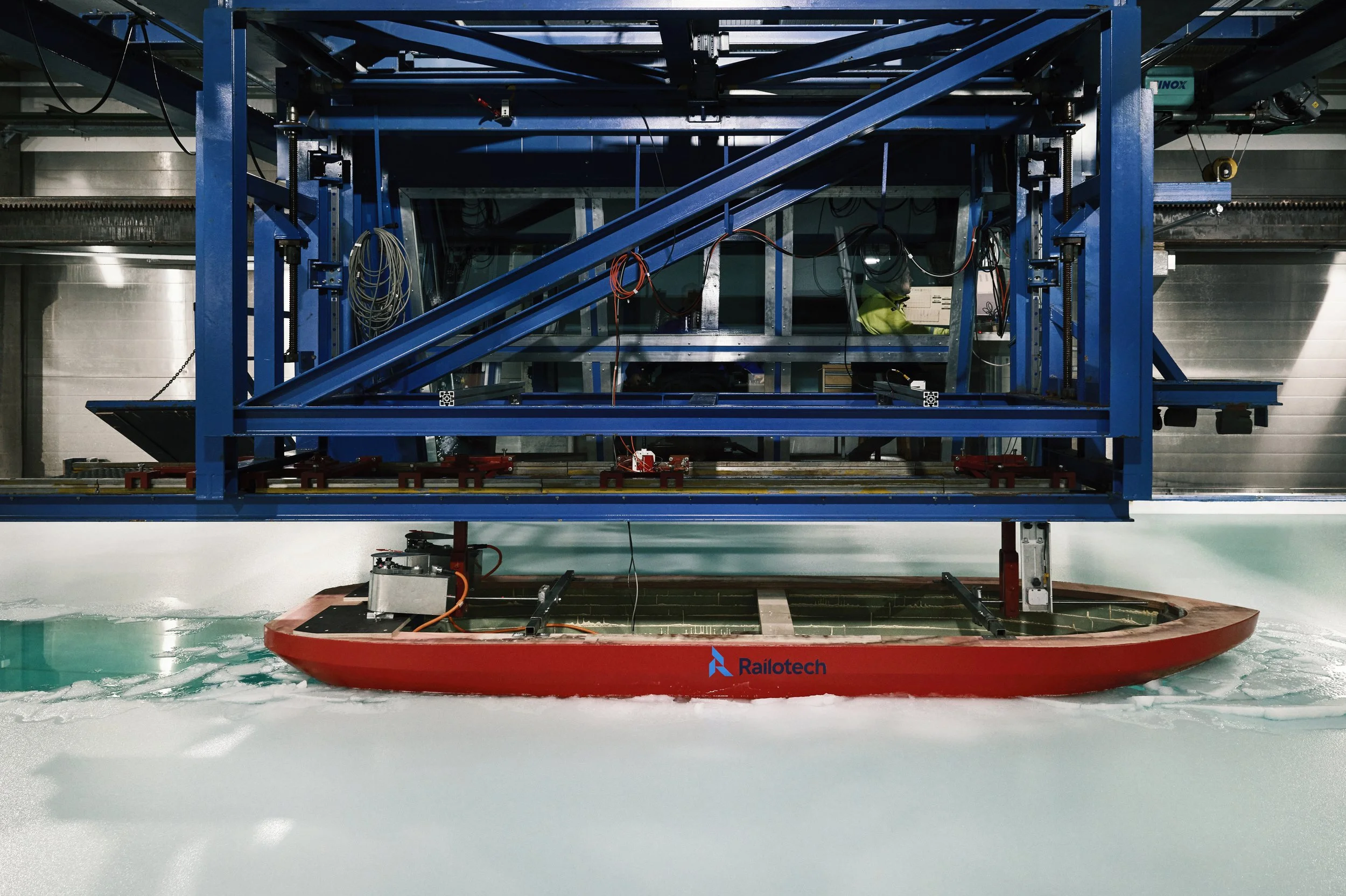
Every vessel we design is optimised for peak performance in the required ice conditions. Mission-specific vessels are refined and verified through in-house ice model testing before construction.
Looking ahead, Hovilainen is clear about the company’s direction.
“We will continue to strengthen our leadership and deliver supreme vessel designs for operating in ice, while creating long-term value for shipowners, shipyards, and stakeholders across the maritime ecosystem.”
Text: Catarina Stewen
Journalist/ Toimittaja
CS Communications Oy Ab
Pictures: Railotech